|

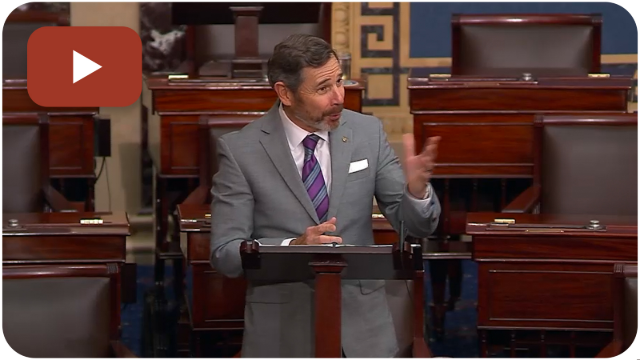
Utah has faced a devastating fire season, and we know that preventing catastrophic wildfires starts with giving land managers the tools to reduce hazardous fuels before they burn. Prescribed fire works, and states should not be penalized for responsibly using it to protect communities, forests, and air quality.
The Senate unanimously passed the Wildfire Emissions Prevention Act following a unanimous consent request made by Senator Curtis, member of the Environment and Public Works Committee. The bipartisan legislation, led by Senators Curtis and Merkley (D-OR), would streamline states’ use of prescribed fires to prevent wildfire emissions, protect ecosystems and wildlife habitats, and make American forests and communities safer, healthier, and cleaner.
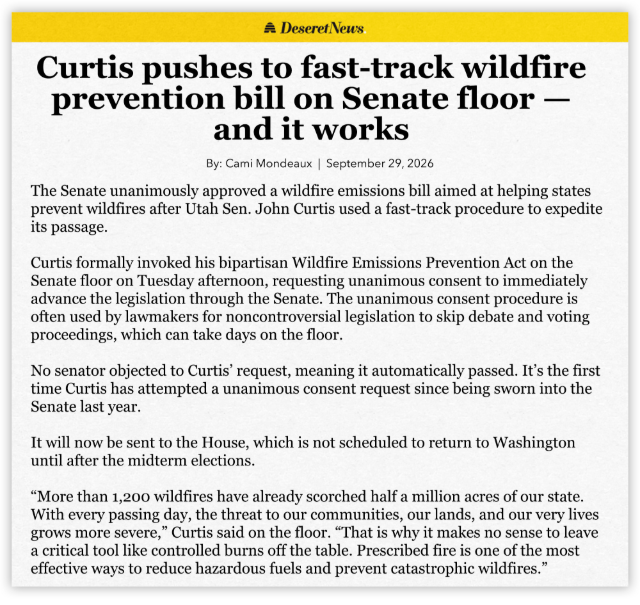
Full story by Cami Mondeaux here.

Americans are rightly skeptical when a large company tells them not to worry about the impacts of a new data center in their community. Senators Curtis and Blunt Rochester (D-DE), members of the Commerce, Science, and Transportation Committee, introduced two bills to give communities better information and resources to understand the impacts of data center development while preserving local control over decisions about new projects.
The bills include the Data Center Community Empowerment Act, which would give communities access to technical expertise to better understand the potential benefits, costs, and infrastructure impacts of proposed data center development, as well as the Data Center Transparency Act, which mandates regular federal reporting on the environmental and energy impacts of large data centers that consume at least 50 megawatts of power daily.
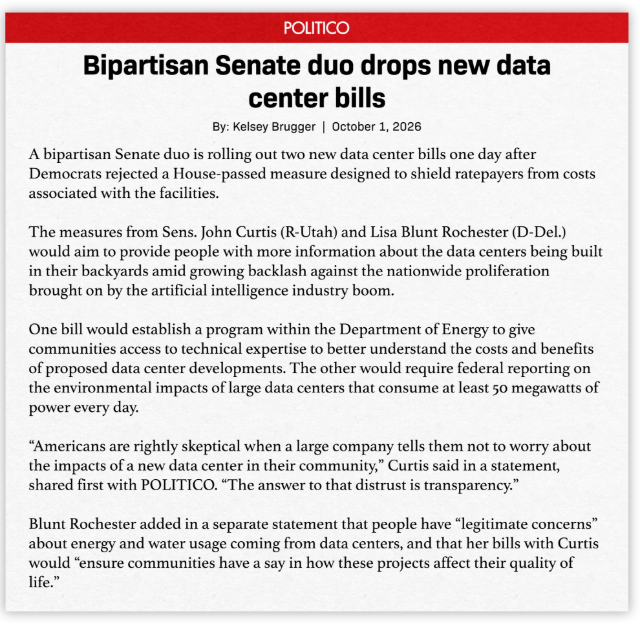
Full story by Kelsey Brugger here.
The pioneers didn’t let water constraints define Utah's future. Neither should we. While conservation is essential, saving the Great Salt Lake will require the same bold, visionary thinking demonstrated by our ancestors.
Senator Curtis took to the Senate floor to call for bold, long-term thinking to restore the Great Salt Lake, drawing on the state’s pioneer heritage and urging Utah’s engineers, entrepreneurs, universities, policymakers, and technology leaders to pursue innovative solutions alongside continued conservation.
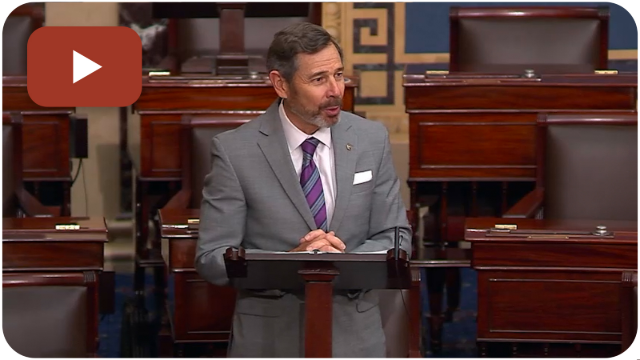
In August, Curtis convened a group of experts—including state elected officials, water experts, researchers, conservation leaders, and members of Utah’s technology sector—for a roundtable discussion on such solutions.
Americans are right to ask why Ukraine matters to us. Ukraine is proving to be a capable partner to the United States, and the Ukrainians are making meaningful progress against Russia. By investing in this war effort in Ukraine, we have seen a principal adversary weakened and humiliated without American servicemembers fighting on the battlefield.
Senator Curtis, member of the Senate Foreign Relations Committee, joined Senators Tillis (R-NC) and Armstrong (R-OK) for a colloquy on the Senate floor to reflect on their recent congressional delegation to Ukraine.
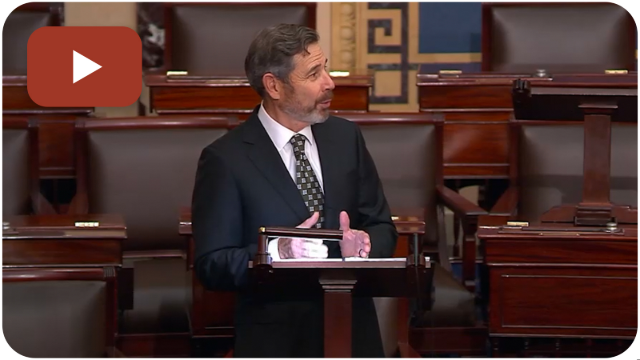
Senator Curtis, Chairman of the Senate Foreign Relations Subcommittee on the Western Hemisphere, held a hearing examining political repression in Nicaragua, the Ortega-Murillo government’s relationships with U.S. adversaries, and the implications for U.S. interests in the Western Hemisphere.
During questioning, Curtis highlighted the regime’s targeting of religious institutions as an indicator of its broader assault on independent institutions and basic freedoms, emphasizing that restrictions on religious freedom can serve as a “canary in the coal mine” for broader authoritarian repression, with attacks on clergy and religious institutions often accompanying the erosion of other fundamental freedoms.
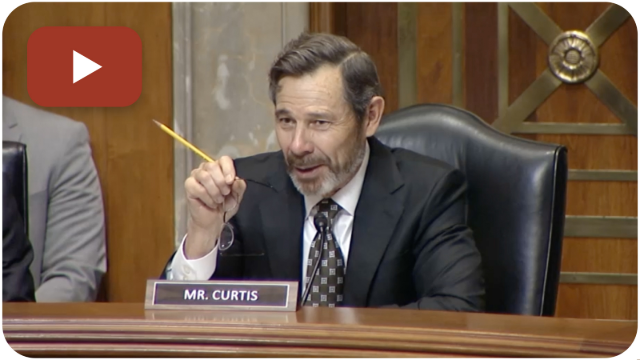
Senator Curtis joined Senators Daines (R-MT), Peters (D-MI), and McCormick in announcing that their resolution commemorating 35 years of independence for the five Central Asian nations (Kazakhstan, Kyrgyzstan, Tajikistan, Turkmenistan, and Uzbekistan) passed the Senate with bipartisan support.

|