Ending the Shutdown
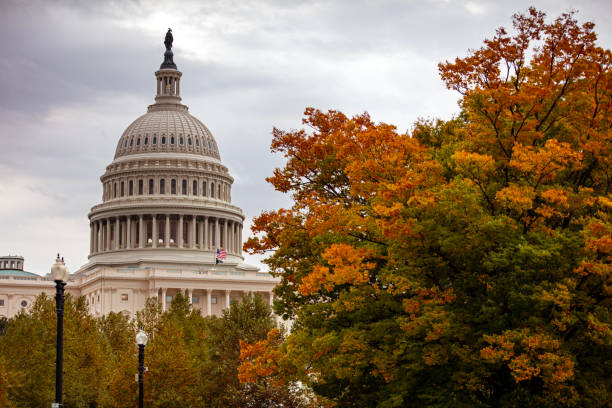
For much of the government shutdown, I met with my colleagues on both sides of the aisle to try and negotiate a path forward. After the government reopened, I answered many of the questions I'd been hearing from Maine people on the phone, via email and online.
"Hey, Senator — why did you vote to end the shutdown without getting what you wanted, a restoration of the Affordable Care Act premium tax credits?”
First, I should mention that restoring the tax credits is what I want; one of the first bills I introduced last January was to do just that — and extend them permanently. But it became clear that we simply weren’t going to get the tax credit fix as long as the shutdown went on, and keeping the pain of the shutdown going in the service of an unattainable goal just didn’t make sense.
“But the Democrats won a big electoral victory and had momentum; wouldn’t holding out a little longer have forced the Republicans to bend on the tax credits?”
Unlikely. This was already the longest shutdown in American history and there was no indication that prolonging it would move the Republicans off their position (“no negotiations on health care as long as we’re in the shutdown,” they kept saying). This was their strong public —and private — position from the very beginning. And each day the shutdown continued, the pain of everyday Americans losing SNAP benefits, Head Start programs, business loan support and the hundreds of other programs people depend upon was getting worse — not to mention the increasing danger in air travel. Essentially, we were asking hungry kids to bear the burden of a strategy that was doomed to fail.
"So you made a deal — some would say you caved — but you didn’t get much of anything in return, right?"
Wrong. The final agreement actually contained some real gains, starting with guaranteeing SNAP benefits for the 170,000 Mainers who rely on them — at an increased level — for the next year whether there is another shutdown or not. Next, it protects rural development and veterans’ programs, as well as the 7,000 Maine households looking for LIHEAP assistance. Importantly, it also guarantees that federal workers who were furloughed or laid-off during the shutdown will get their jobs back, with back pay.
And finally, it guarantees an up or down vote on a bill extending the ACA tax credits (drafted by the Democrats) within the next month, which will either be successful or will put the Republicans squarely on the record opposing relief for skyrocketing health insurance premiums.
"OK, that sounds nice, but still, wouldn’t keeping the shutdown going have gotten you an even better deal?"
Actually, keeping it going could have tipped us into a real disaster. Don’t forget that Donald Trump’s position on this wasn’t to negotiate, but to end it — entirely on their terms — by pressuring the Senate Republicans to abolish the filibuster, thus eliminating Democratic leverage on this — or anything else — altogether. And I know that this was not an idle threat or negotiating ploy; he meant it and a growing number in the Republican caucus agreed.
No filibuster and we’d be facing a nationwide abortion ban, voter suppression laws and, quite possibly, the elimination of the Affordable Care Act itself with no tool to stop it.
"But Senator, a lot of people saw this as an opportunity to stand up to Donald Trump and all the harm that he is doing to the country, and you bailed. What do you say to them?"
First, I’m totally with them on this danger and have been sounding the alarm since last winter about the demise of our system of checks and balances and our accelerating slide toward authoritarianism. From the floor of the Senate, to interviews with Maine journalists, to national TV, podcasts and social media and multiple No Kings rallies here in Maine, my message has been clear — this is one of the most dangerous moments our country has ever faced and we need to unite to stop it.
But the question is whether a government shutdown is an effective tool in that fight; whether a shutdown is the right place to draw the line. I don’t think it is because (as we’ve now seen) a shutdown empowers Donald Trump rather than rein him in. He has used the shutdown to cut off SNAP, to fire more federal workers, to cut off projects he doesn’t like (particularly in blue states) and to do generally whatever he wants. Granted, he is doing a lot of that anyway, but the shutdown has only made it worse. I never understood the logic of standing up to a bully by giving him a new weapon to hit you with.
And by the way, guess which federal workers are being paid during the shutdown? ICE agents; you know, the guys with masks and zip ties. Because they got a special appropriation in last summer’s Big Ugly Bill, they are exempt from the furloughs and no pay now being inflicted on everybody else.
We do need to stand up to him, but a shutdown, with all the pain it is bringing to the very people we want to help, is just not the place to do it.
Will we be able to pass a bill next month extending the tax credits? It’s going to take some hard bargaining and is anything but a sure thing, but at least now there’s a chance where there was none before. And, in the meantime, the kids will be fed.
___________________________________________________________
Ensuring Our Veterans Have the Best Support

Supporting our veterans should never be partisan, and prioritizing customer service shouldn’t be reserved for the private sector. The signing into law of the Improving Veteran Experience Act, that I introduced, is a perfect example of government providing a necessary public service. I want to extend my sincerest appreciation to my Republican colleague Senator John Cornyn for his work helping get this important legislation over the finish line. This is an important milestone for veterans as we can celebrate the codification of a long-awaited and much-needed office that is laser-focused on improving veterans’ ability to access their hard-earned benefits.
Under the new law, the Veterans Experience Office (VEO) will become a permanent part of the Department of Veterans’ Affairs (VA), ensuring it can continue to provide consistent and quality care for the veteran community. Established in 2015 the VEO collects veterans’ feedback through surveys and uses that data to continuously improve the VA’s website and other resources used by veterans interacting with the VA.
Veterans across Maine and our nation consistently and courageously answer the call of duty when serving. We owe it to them to deliver the very best care.
___________________________________________________________
Supporting Maine's Loggers

Whether you live down in Kittery or up in Fort Kent, the vastness of the Maine forest is the backdrop for everyday life. It provides natural beauty, outdoor recreation, and most importantly fuels our logging and foresting industry — the backbone of Maine’s resource-based economy. For generations, Maine’s loggers have proven to be some of the most hardworking folks our state has to offer. Logging has been synonymous with the success of Maine — creating good jobs, supporting hard-working families and boosting local rural economies.
Maine’s logging industry has demonstrated its resiliency since well-before Maine became a state. Since the founding of the first water-powered sawmill in 1634, the story of Maine logging has been one of innovation and ingenuity. The history of Maine logging and foresting is full of instances of technological advancement and adaptation.
Today’s logging and foresting industries face unique challenges stemming from increasing extreme weather events and natural disasters. Unforeseen weather can severely impact the logging harvest, which means lower revenues for Maine logging businesses. In some instances, a poor harvest can be enough to force a small family logging business to close its doors.
Unlike other areas of the agricultural economy, under the current law there are no insurance or safety net program provisions that provide logging businesses with relief after such an event. That’s why earlier this year, alongside my colleagues in the Maine Delegation, I sponsored legislation to support loggers who have lost income due to natural disasters. The Loggers Economic Assistance and Relief Act would unlock federal assistance eligibility to logging businesses in the event of a disaster.
As the logging industry continues to evolve, this is a commonsense step to provide Maine’s logging industry with a much-needed safety net, ensuring businesses can stay on their feet after a bad harvesting season. I see this legislation as the Maine delegation’s bipartisan recognition of the importance of Maine’s logging industry to our state’s history, and a resounding commitment to supporting our hardworking loggers for generations to come.
___________________________________________________________
Keeping Maine Small Businesses Open
Maine’s small businesses are the backbone of our robust economy — especially during the holidays and summer season. That’s why with the help of my Republican colleague Senator Mike Rounds of South Dakota, and 31 other Senate Democrats and Republicans, I pushed for the release of supplemental H-2B seasonal employment visas to support small businesses across the United States.
We called on the Department of Homeland Security to release the maximum allowable number of additional H-2B visas for fiscal year (FY) 2026. H-2B visas fill workforce needs for American small businesses that are unable to hire enough American workers to fill the temporary, seasonal positions — and bipartisan research shows employing these workers boosts wages across the board.
It's important to mention that employers must first make a concerted effort to hire American workers to fill open positions; when the local workforce is insufficient, the H-2B visa program is a necessary tool to support local economies. With Maine continuing to experience a shortage of seasonal and temporary employees, these non-immigrant visas provide a lifeline for the economy and ensure small businesses can meet the demand for their products and services. |